Konstantinos Vardis
Computer Scientist
My work focuses on computer graphics and vision R&D, with emphasis on rendering, neural graphics, and learned 3D content generation. I hold a PhD from the Athens University of Economics and Business (AUEB) and am based in Zürich, Switzerland.
I am interested in Research Lead and Faculty positions.
Research Interests: 3D Generative AI, Light Transport, GPU Computing
Selected Publications (Full list on Google Scholar)

2026. Real-time Rendering with a Neural Irradiance Volume
Eurographics 2026 (accepted)

2026. DreamAnywhere: Object-Centric Panoramic 3D Scene Generation
IEEE/CVF Winter Conference on Applications of Computer Vision (WACV 2026) (Oral)

2023. A Neural Builder for Spatial Subdivision Hierarchies
The Visual Computer (Proceedings of Computer Graphics International 2023)


2020. A Survey of Multifragment Rendering
Computer Graphics Forum – presented at Eurographics 2020
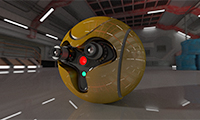
2016. DIRT: Deferred Image-based Ray Tracing
Eurographics/ACM SIGGRAPH Symposium on High Performance Graphics (HPG 2016)
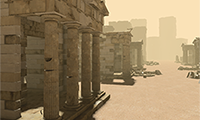
2014. Real-time Radiance Caching using Chrominance Compression
Journal of Computer Graphics Techniques (JCGT) – presented at i3D 2015
PhD Thesis

2016. Efficient Illumination Algorithms for Global Illumination in Interactive and Real-Time Rendering
Department of Informatics, Athens University of Economics & Business.
Advisor: Prof. Georgios Papaioannou
Professional Experience (See full CV)

Principal Researcher / Team Lead
Research and development in computer graphics, vision and machine learning at the Cloud Graphics Research Group.
- Led team(s) of research scientists and engineers.
- Research and development in 3D Generative AI, Neural Graphics and Neural Rendering.

Postdoctoral Researcher
Research and development on interactive rendering and illumination algorithms.
- Lumibricks (2020–2021): Modular Illumination Transfer for Photorealistic Visualization on Commodity Hardware.
15-month research program co-funded by the European Union and Greek National Funds. - Interactive Photorealistic Image Synthesis (2020): 12-month research program funded by the AUEB Research Center.
- Proof-of-concept implementation of coarse shading technologies for the ARM Mali-G76 Bifrost architecture (2019).
PhD Researcher
- Nomitech Ltd (2016–2017): Visualization Engine for the CostOS software suite.
- PRESIOUS (2013–2016): Predictive digitization, restoration and degradation assessment of cultural heritage objects.
3-year EU-funded STREP (GID: 600533).
- GLIDE (2014–2015): Goal-driven Lighting for Dynamic 3D Environments.
18-month project co-funded by the General Secretariat of Research and Technology and the European Union (ARISTEIA II programme).
Satellite imagery processing: Machine Learning pipelines for visible, infrared, and radar data.
Senior Software Engineer
Think Silicon - Applied Materials
- Development of drivers and software tools for ultra-low power GPUs (Nema), tested on software reference mode and Xilinx FPGA SoCs.
- Design and development of GLOVE, an open-source intermediate layer between OpenGL ES and Vulkan. Achieved EGL 92% and GLES2 98% conformance.
- GPU-WEAR: Ultra-low power heterogeneous GPUs for Wearable/IoT devices. EU-funded H2020 project (GID: 717850), 2016–2018.
AAA game engine rendering: vegetation systems, naval battles, buildings, and UI. Empire: Total War (BAFTA Award).
Academic
Service
Reviewer and IPC member for:
Education
Teaching
Athens University of Economics and Business , Department of Informatics
Teaching Assistant 2012 – 2015
Computer Graphics BSc Course Databases BSc Course
Coordinating lab sessions for over 300 BSc students each year, including course and exam material preparation, teaching, and examining.
Research Software

A multi-purpose platform for virtual operations on digitized cultural heritage objects. Concentrated on object reassembly tasks and measurements in a fully three-dimensional environment.

A scene graph-based deferred rendering API and research platform for testing real-time algorithms for shading and illumination effects using OpenGL. Provided as DLL with ANSI C API. Property of the AUEB Graphics Group, under MIT license.

A mini, CPU-based, tiled ray tracing engine consisting of two files with minimal dependencies. Created for educational purposes. Suitable for rapid prototyping and integration into larger systems.
Reference implementations of common C++ data structures and basic searching/sorting algorithms written in C++11. Intended as a helper on common implementations, not as a performance-optimized library.
An online platform for ray tracing shader development and experimentation. Real-time interactive environment for learning and prototyping ray tracing algorithms.